How We Got Started: Two Cameras, One Microphone, and Our First Stream in 2008
Today, you have hundreds of concerts at your fingertips in the archive. But it all began with an unusual collaboration–in 2008, around two cameras and the first live recording and broadcast, the forces of official state culture (with the support of the Slovak Ministry of Culture) joined with those of Bratislava’s alternative, experimental scene. Take a look at where it all began–and who makes up the team today.
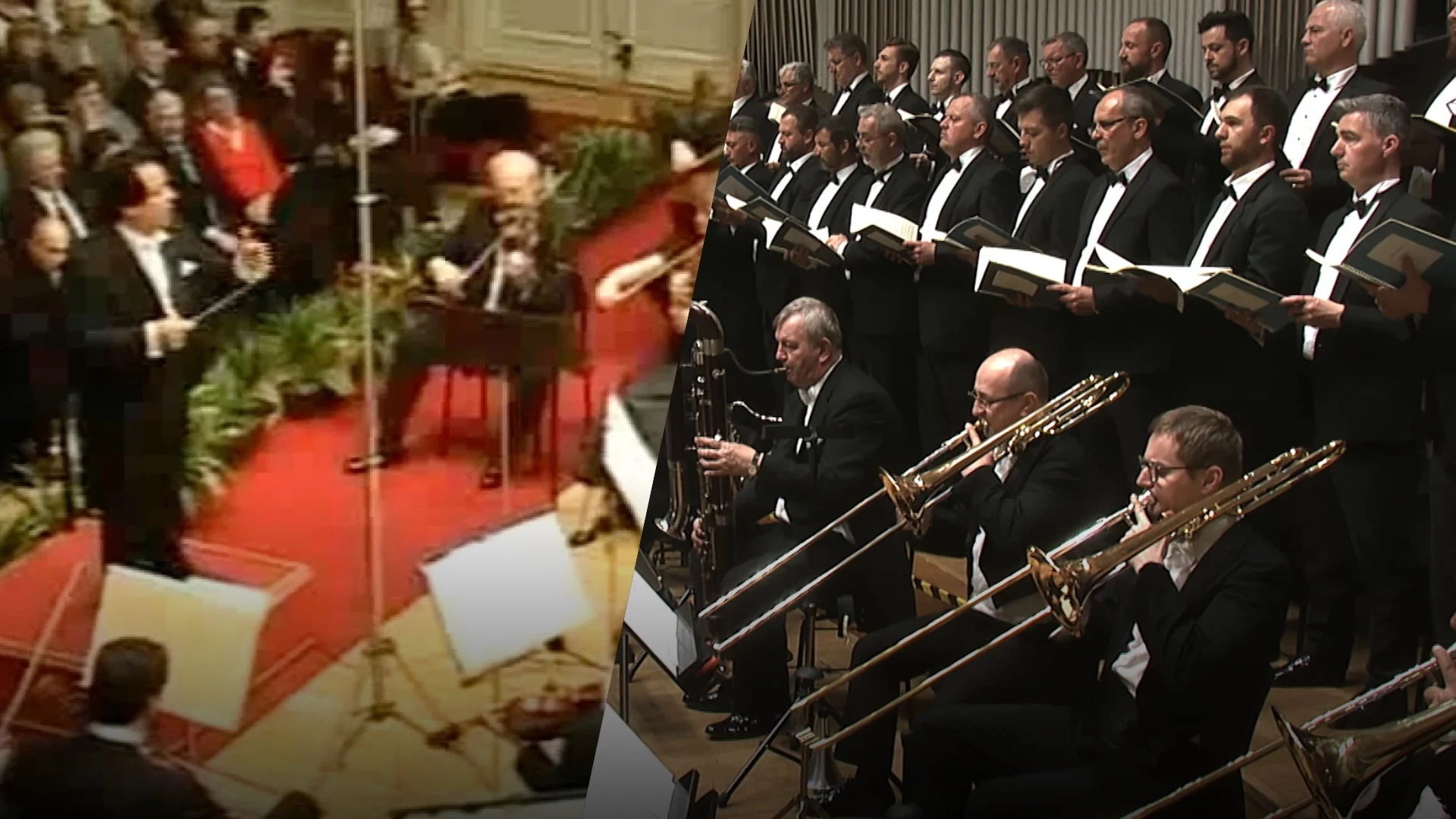
Today, the Slovak Philharmonic is one of the orchestras whose concerts you can watch online anytime and for free. But when it all began, it was quite an adventure.
The idea came from Finland in 2007. The visionary general director of the Slovak Philharmonic, Prof. Marian Lapšanský, saw the ClassicLive project–online broadcasts of symphony orchestra concerts–in the Finnish city of Lahti. It was a time when, with online recordings and “on demand” (recordings available upon request, now a common practice for streaming services like Netflix and others)–but he understood it immediately: this is exactly how concerts would one day be shared with the world. It was an exceptionally accurate prediction of the future–and thanks to his bold decision, we became one of the very first orchestras to systematically handle the recording, streaming, and online distribution of our concerts. We offer concert recordings from 2008 to the present. He got excited and reached out to sound engineer Stano Beňačka and composer Marek Piaček. They immediately knew who to bring on board: a colleague from the Bratislava experimental electronic music scene (of which both Stano and Marek were active members at the time as the experimental electronic duo Mio-Mio) – Petra Gonda (aka gnd) from Multiplace. At the time, this scene was one of the few that knew how to record and stream concerts for the web–it organized media art and internet events, as well as experimental music festivals such as NEXT (since 2000). And that was what made the whole thing so exceptional: two worlds that would otherwise have passed each other by crossed paths here–**official culture** (the Slovak Philharmonic, with support from the Ministry of Culture of the Slovak Republic) and Bratislava's alternative, experimental scene. At the time, the “old, seasoned radio veteran”Vašek Frkal, a sound engineer at Slovak Radio who had been recording SF concerts even before Marek Piaček began attending them as a conservatory student, ensured the sound was top-notch. Vašek's son, Vašo Frkal Jr., then still a student at the Technical University, also learned the ropes of camera work and editing. Working together–with the help of Bratislava's alternative scene–we designed the technology, secured a server with the best connectivity in the city, and presented the finished project to the management of the Slovak Philharmonic. They liked it–we received the long-awaited budget from the Ministry of Culture of the Slovak Republic and began construction. So, our thanks go to–in addition to the Ministry of Culture of the Slovak Republic (and its then-head, Minister Marek Maďarič; it should be emphasized that the fact that you're using this service for free today was his condition for supporting the project) – and especially to the then-Director General of the SF, Marian Lapšanský, as well as our founding father–Stano Beňaček, Peter Gonda, and Marko Piaček.
First entry: February 22, 2008. Under the baton of Alexander Rahbari, the orchestra performed Puccini's Preludio sinfonico, Mendelssohn's “Italian” Symphony, and Tchaikovsky's Italian Capriccio. At the time, the website was programmed by Peter Gonda (aka gnd). He used Ogg Theora codecs for both video and audio. We recorded via a stream using a Teracue device, which was captured by a Linux server. Back then, it was only an SD-quality recording in 4:3 aspect ratio. A humble beginning, as far as video goes.
At the heart of the entire recording was a single rare microphone–**Soundfield**. Its selection was thanks to Stan: thanks to his connections with the American audiophile pioneer of one-point recording, David Chesky, who had been experimenting with one-point recording (recording sound from a single point) since the 1980s, the choice fell on this particular microphone. The Soundfield is a microphone that–when physically placed in the right spot in the hall–delivers exceptionally faithful sound that is incredibly lifelike. And so, after some “mountaineering feats” in the attic of the Reduta building, my colleagues hung it exactly where it belonged (and spent nearly a week fine-tuning it during the orchestra's rehearsals). On top of that, two robotic cameras–there wasn't much we could do with them, but we did our best. Still just SD quality and 4:3 resolution.
See where it all began. In the playlist Our Beginnings, we've compiled the oldest recordings from the archive for you. A little time machine–exactly the broadcasts we learned from.
We gradually switched to the 16:9 format, which is a trade-off, because you can capture a soloist better in 4:3 resolution. We had to learn how to frame the image for a wider aspect ratio. And so on–later we also switched to Full HD, but that's a topic for another article.
Who we are today and where we are today. From the original StreamBoyz (we were also assisted with directing by SFZ choirmaster Jozef Chabroň)–listen to the broadcast celebrating our team's 10th anniversary (LINK)–has gradually evolved into today's Slovak Philharmonic StreamTeam. The team has grown and new faces have joined us–**Renáta Beličová** (director, since 2016), Andrej Osvald (since 2019, then a student at the Film and Television Faculty of the Academy of Performing Arts), and Olesia Stepura (since 2024, a young composer and sound engineer–also a student at the Film and Television Faculty of the Academy of Performing Arts at the time). On June 30, 2026, Stano Beňačka retired, and leadership of the team was taken over by a young, recent master's graduate from the Film and Television Faculty at the Academy of Performing Arts (FTF VŠMU), Andrej Osvald. Today, behind every recording stands a well-coordinated team of sound engineers, cameramen, directors, and post-production technicians.
The whole story**–from the Reduta attic to the present day, as written by Stano Beňačka**–can be found in StreamTeam's History.
Enjoy listening and watching!
Back to news