Slovak Philharmonic
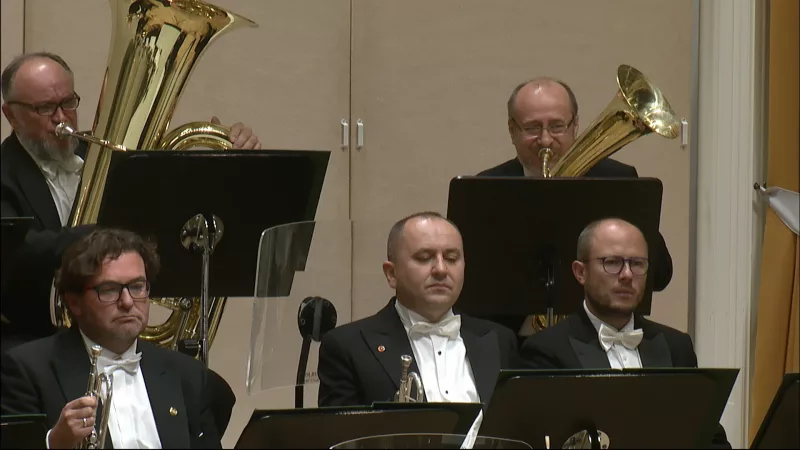
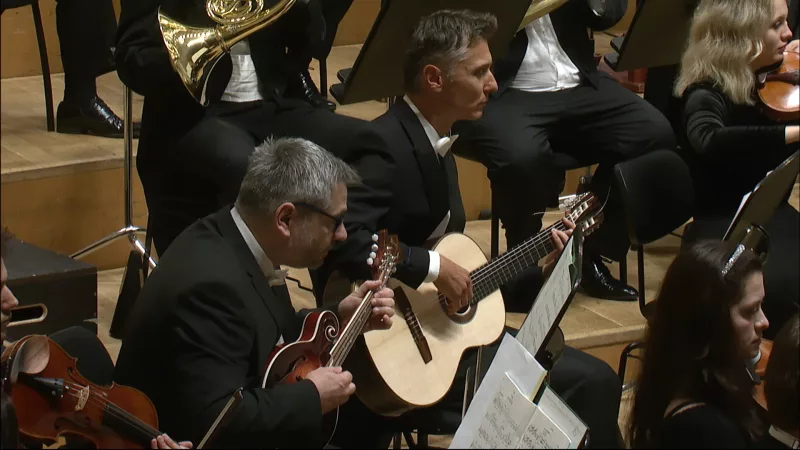
The first third of the 20th century was marked by rebellion, struggles for new musical realities, experiments, and even scandals. Paris became the center of this “new wave”. Artists from all corners of the world gathered in the French capital to address the spiritual crisis of the turn of the century. From this perspective, Francis Poulenc's compositional profile is colorful and rich in seemingly contradictory tendencies. He avoided explicit experimentation and maintained a respect for the music of the past. The Concerto for Organ, String Orchestra, and Timpani lies at the intersection of his “secular” and “sacred” motivations, when Francis Poulenc found firm faith at the height of his creative powers. Gustav Mahler, on the other hand, searched for his faith throughout his dramatic life. As a conductor, he was self-confident and determined. As a composer, he was constantly doubting. He was marked by inner contradictions, uncertainty, and fatal fears. Each of his nine symphonies is influenced by this peculiar psychology. He fought his own mental traumas with gigantic symphonic opuses. In his Seventh Symphony, he sings bizarre songs of the night; the night that followed the ruthless tragedy of the Sixth Symphony. In his Seventh Symphony, Mahler enriched the orchestra with cowbells and mandolins in order to emphasize the dark spectrum of its fantastical intent.
We welcome Emmanuel Villaume, a favorite of the Bratislava audience, to the conductor's podium of the Slovak Philharmonic. By inviting one of today's most prominent organists, we also commemorate the reopening of Notre Dame Cathedral in Paris – Vincent Dubois is one of its titular organists.
25. 9. 2025 Bratislava, Reduta / Slovenská filharmónia, Emmanuel Villaume, Vincent Dubois / BHS, Poulenc – Mahler. [in Slovak]
Sources
Bratislavské hudobné slávnosti : Koncert, 25. septembra 2025. [in Slovak] stream.filharmonia.art/bhs/koncert/KS20250925…
Bratislavské hudobné slávnosti 2025 : Programová skladačka 60. ročníka, 19. 9. – 5. 10. 2025. [in Slovak] stream.filharmonia.art/bhs/2025/bulletin
Citations follow STN ISO 690 (D. Katuščák methodology) – Copy citation puts one on your clipboard.
Page through it with the arrows, keyboard or by dragging a corner of the page. The original is kept in the archive of the Slovak Philharmonic.